

TikTok ads for ecommerce are the most direct path from product discovery to purchase available to online retailers right now. Unlike Meta or Google, TikTok collapses the funnel into a single platform where a user can watch a video, tap a product card, and complete checkout without ever leaving the app. The introduction of TikTok Shop and the GMV Max campaign type has made this even more pronounced in 2026. To get real returns, you need three things working together: reliable tracking through TikTok Pixel and Events API, creative that feels native to the feed, and a full-funnel structure that includes affiliates and post-purchase retention.
What are TikTok Shop ads and how does GMV Max optimise ecommerce sales?
TikTok Shop ads are the standard format for ecommerce marketing on TikTok in 2026, covering video placements, live shopping, and product card units that appear directly in the For You feed and Shop tab. The critical shift for sellers to understand is that GMV Max is now the single default campaign type for TikTok Shop sellers since July 2025. Separate Video Shopping Ads and Product Shopping Ads have been retired in favour of this unified structure.
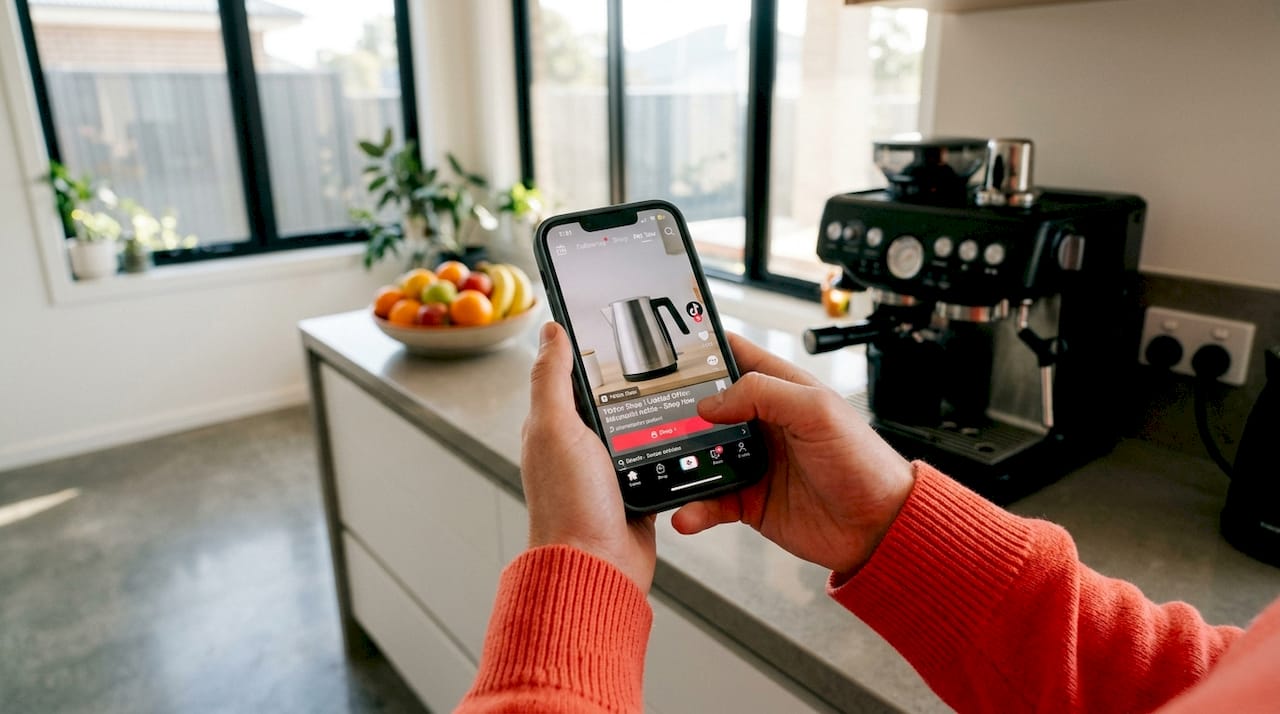
GMV Max uses machine learning to optimise for total sales value (Gross Merchandise Value) rather than clicks or impressions. This matters because the algorithm allocates budget across all available placements and creative assets simultaneously, finding the combination that generates the most revenue. You are no longer manually splitting budgets between video and product card formats. The system does that work for you, provided you give it enough data to learn from.
Here is what each TikTok Shop ad placement covers:
- Video ads: In-feed video with a product link overlay, driving directly to the TikTok Shop product page
- Live shopping ads: Promoted live streams where viewers can purchase in real time without leaving the broadcast
- Product card ads: Static or carousel product listings appearing in the Shop tab and search results
- Spark Ads: Boosted organic posts from your own account or affiliate creators, preserving social proof
Budget is the most common reason GMV Max campaigns underperform. The minimum recommended daily spend to exit the learning phase is $50 to $100 per day, sustained over 14 days. Brands that start at $20 per day and wonder why results are inconsistent are simply starving the algorithm of the conversion signals it needs.
| Campaign element | Recommended setting |
|---|---|
| Campaign type | GMV Max (single unified type) |
| Daily budget minimum | $50 to $100 AUD |
| Learning phase duration | 14 days minimum |
| Optimisation goal | Total GMV (not clicks) |
| Creative assets | Minimum 3 to 5 video variations |
Pro Tip: Do not adjust your GMV Max campaign budget by more than 20% in any 24-hour period. Large budget changes reset the learning phase and force the algorithm to start collecting conversion data from scratch.
How to set up effective TikTok tracking for ecommerce campaigns
Accurate tracking is the foundation every TikTok ad campaign tips guide glosses over, yet it is where most ecommerce brands lose money. TikTok Pixel handles browser-side event tracking, firing when a user completes an action on your website such as viewing a product, adding to cart, or purchasing. The Events API handles server-side tracking, sending the same data directly from your server to TikTok, bypassing ad blockers and iOS privacy restrictions that routinely suppress browser signals.
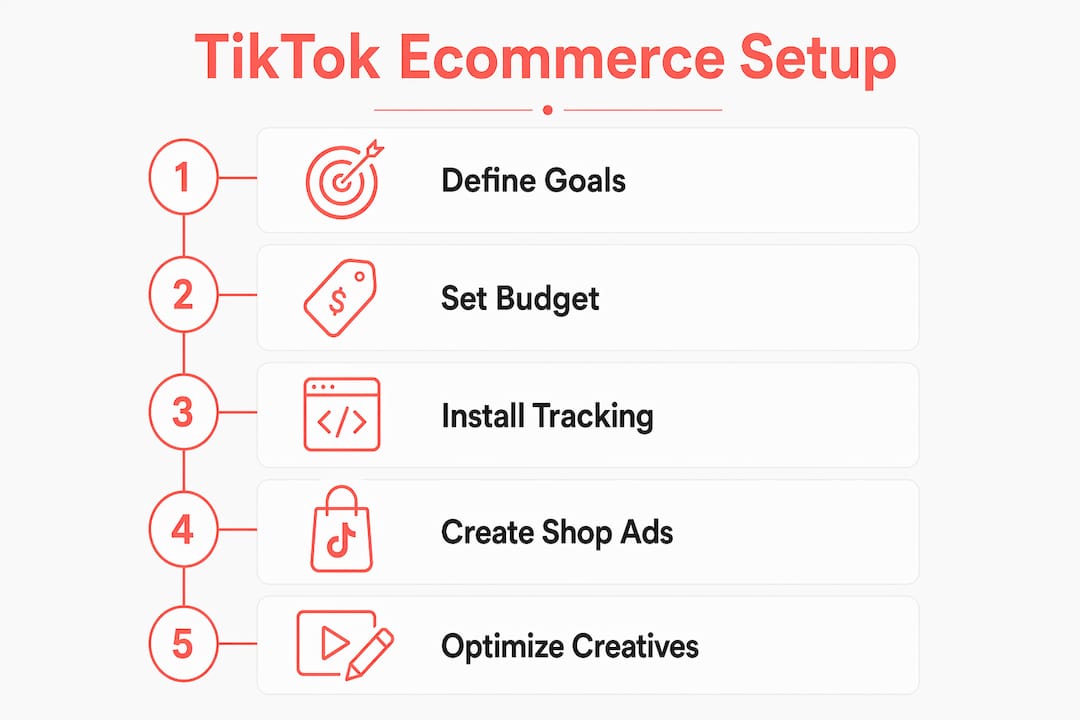
Running both together is called redundant tracking, and the performance difference is measurable. Using TikTok Pixel and Events API together improves Event Match Quality by 15 to 25%, which directly improves conversion attribution and campaign optimisation. Higher Event Match Quality means TikTok can match more purchase events back to the ad that drove them, giving the algorithm better signals to find buyers.
The one technical detail that trips up most setups is event deduplication. When both Pixel and Events API fire for the same purchase, TikTok needs to know they represent a single transaction, not two. Consistent event IDs in redundant tracking prevent double counting and keep your reporting accurate. Without this, your reported ROAS will be inflated and your optimisation signals will be corrupted.
The standard ecommerce events to implement, in order of priority:
- ViewContent: Product page views, with product ID and price parameters
- AddToCart: Cart additions, with product ID, quantity, and value
- InitiateCheckout: Checkout starts, with cart value
- Purchase: Completed orders, with order ID, value, and currency (this is your most critical event)
- CompletePayment: TikTok Shop native checkout completion event
Pro Tip: If you are on Shopify, install the TikTok Sales Channel app and enable the Events API integration from the TikTok Ads Manager. This handles deduplication automatically using Shopify’s order IDs as event identifiers, saving you significant developer time.
What creative formats convert best on TikTok for ecommerce in 2026?
Creative is where TikTok advertising strategies succeed or fail, and the platform’s own data makes the answer clear. UGC-style video delivers 30 to 40% lower CPMs and higher engagement than polished brand video because it blends naturally into the organic feed. TikTok’s algorithm penalises ads that users skip in the first three seconds with higher CPMs. This is what practitioners call the “boredom tax.” Your opening frame is not a branding opportunity. It is a retention problem.
The most effective opening hooks for ecommerce follow a predictable structure:
- Lead with the result, not the product. Show the transformation, the reaction, or the outcome in the first two seconds before revealing what caused it.
- Use pattern interrupts. An unexpected visual, a direct question to camera, or a bold text overlay stops the scroll more reliably than a product beauty shot.
- State the problem explicitly. “If your skin still breaks out after trying everything…” speaks directly to a buyer who is already searching for a solution.
- Demonstrate, do not describe. A hands-on product demonstration outperforms a voiceover explanation for almost every physical product category.
- Use native formats. Vertical video filmed on a phone, natural lighting, and conversational delivery signals to both the algorithm and the viewer that this content belongs in the feed.
Creative fatigue is a real operational problem for ecommerce brands running TikTok ads at scale. A single creative typically peaks in performance within seven to fourteen days before CPMs rise and click-through rates fall. The solution is a production system, not a one-off shoot. Batch filming and repurposing Instagram and Facebook Stories into TikTok videos reduces production time and supports a consistent publishing schedule without requiring a full production crew for every asset.
Spark Ads deserve specific mention here. Rather than running a separate ad creative, Spark Ads boost an existing organic post from your account or an affiliate creator’s account. This preserves the post’s existing likes, comments, and shares, which function as social proof and improve conversion rates compared to a cold ad unit with zero engagement.
Pro Tip: When a creative starts declining, do not delete it. Duplicate the ad, change only the opening three seconds, and relaunch. You preserve the body of the creative that was working while solving the hook problem that caused fatigue.
How to build a full-funnel TikTok Shop campaign with affiliates and retention
Successful TikTok Shop sellers treat paid media, affiliate partnerships, and post-purchase retention as a single connected system rather than separate activities. Integrating product feed quality, Spark Ads, affiliate management, and retention tactics within one measurement framework is what separates brands achieving a blended ROAS of 2.1x to 3.8x from those stuck below breakeven.
The affiliate structure that works in practice has three tiers:
- Open collaboration: Any creator can apply to promote your products through TikTok’s affiliate marketplace, typically at commission rates of 15 to 25%. This generates volume and surfaces unexpected performers.
- Focused outreach: You proactively recruit creators in your niche with 10,000 to 500,000 followers, offering higher commissions or product gifting in exchange for committed posting frequency.
- Hero creator contracts: Two or three top performers get formal agreements with guaranteed monthly content volume, exclusivity clauses, and performance bonuses. These creators become the primary source of Spark Ads inventory.
Affiliate commission rates between 15 and 25% with structured creator contracts drive consistent content frequency and measurable sales impact. The TikTok Creator Marketplace is the starting point for finding and managing these relationships at scale.
Retargeting and retention are where most brands leave significant revenue on the table. A 30-day post-purchase suppression window combined with retargeting loops achieves repurchase rates of 22 to 35% within 90 days, compared to a platform average of 11%. The suppression window prevents you from spending ad budget on customers who just bought, while the retargeting loop re-engages them with replenishment or cross-sell creative once the window closes.
TikTok Shop’s most significant structural limitation is that sellers do not have direct access to customer email addresses. Effective email capture post-purchase ranges between 18 and 31% when brands use package inserts directing customers to a landing page, or SMS opt-ins on order confirmation pages. Building this owned audience is critical for long-term sustainability because it reduces your dependence on paid reach for every repurchase cycle.
| Funnel stage | Primary metric | Target benchmark |
|---|---|---|
| Awareness (affiliate and organic) | GMV per creator | Track weekly per creator |
| Conversion (paid Shop ads) | Shop conversion rate | 3% to 6% for most categories |
| Acquisition cost | Blended CAC | Below average order value |
| Retention | Repurchase rate at 90 days | 22% to 35% with suppression loop |
Pro Tip: Track your ecommerce growth metrics as a blended number across organic, affiliate, and paid rather than isolating paid ROAS. Brands that optimise paid in isolation consistently over-invest in top-of-funnel spend while underinvesting in the retention loops that compound returns over time.
Key takeaways
TikTok ads for ecommerce perform best when GMV Max campaigns, redundant tracking, native creative, and affiliate-driven retention loops operate as one unified system.
| Point | Details |
|---|---|
| GMV Max is the standard | Structure all TikTok Shop campaigns around GMV Max, with a minimum $50 to $100 daily budget for 14 days. |
| Redundant tracking is non-negotiable | Run TikTok Pixel and Events API together with event deduplication to improve Event Match Quality by 15 to 25%. |
| Native creative wins on cost | UGC-style video delivers 30 to 40% lower CPMs than polished brand content. Prioritise authentic opening hooks. |
| Affiliates fuel the funnel | Commission rates of 15 to 25% with tiered creator contracts generate consistent content and measurable GMV. |
| Retention multiplies returns | A 30-day suppression window with retargeting loops drives repurchase rates of 22 to 35% versus the 11% platform average. |
What I have learned running TikTok ad campaigns for ecommerce brands
The most consistent mistake I see ecommerce brands make is treating TikTok paid ads as a standalone acquisition channel. Paid TikTok ads perform best when amplifying proven organic content, which means your organic and affiliate content pipeline needs to be producing results before you commit serious budget to GMV Max campaigns. Brands that skip this step spend the first three months paying to test creative hypotheses that an organic strategy would have answered for free.
Measurement discipline separates the brands that scale from those that plateau. I have seen businesses running six-figure monthly TikTok spend with no Events API integration, which means their optimisation signals are incomplete and their reported ROAS is unreliable. Setting up redundant tracking correctly takes a few hours. Not doing it costs you months of suboptimal algorithm performance.
The post-purchase retention piece is consistently undervalued. Most ecommerce marketers I work with are focused entirely on acquisition cost and first-purchase ROAS. The brands generating the strongest returns are the ones obsessing over 90-day repurchase rates and building owned audiences through SMS and email capture. TikTok Shop makes acquisition relatively efficient. Retention is where the margin lives.
One more thing: trust the algorithm once you have given it what it needs. GMV Max requires budget, time, and quality creative inputs. Brands that interfere constantly by adjusting budgets, pausing ads, and changing targeting mid-learning phase are the same ones complaining that TikTok ads do not work.
— Liza
Ready to scale your TikTok ecommerce results?
Understanding the framework is one thing. Executing it consistently across creative production, tracking setup, affiliate management, and retention is where most ecommerce businesses need support.
Moormarketing works directly with ecommerce brands to build and optimise TikTok ad campaigns that generate measurable revenue growth. From GMV Max campaign structure to ecommerce marketing workshops that cover creative strategy and tracking setup, every engagement is led by senior strategists, not outsourced teams. If you are serious about making TikTok a primary revenue channel, explore Moormarketing’s ecommerce growth strategy services to see how a structured approach translates into consistent sales results.
FAQ
What is GMV Max and how does it work for TikTok Shop?
GMV Max is TikTok’s unified campaign type for Shop sellers, replacing separate video and product shopping ad formats since July 2025. It uses machine learning to allocate budget across all placements and creative assets to maximise total sales value rather than clicks or impressions.
How much should I spend on TikTok ads to see results?
The minimum recommended daily budget to exit the learning phase is $50 to $100 per day, sustained for at least 14 days. Spending below this threshold prevents the algorithm from collecting enough conversion data to optimise effectively.
Do I need both TikTok Pixel and Events API?
Yes. Running both together improves Event Match Quality by 15 to 25%, which improves attribution accuracy and campaign performance. The Events API bypasses ad blockers and iOS restrictions that routinely suppress browser-side Pixel data.
Why does UGC-style creative perform better than polished video on TikTok?
UGC-style video blends naturally into TikTok’s organic feed, reducing the signal to users that they are watching an ad. This results in 30 to 40% lower CPMs and higher engagement rates compared to polished brand content, which the platform’s algorithm penalises through higher costs when users skip early.
How do I retain TikTok Shop customers without access to their email addresses?
Use package inserts directing customers to a dedicated landing page for email capture, or add SMS opt-ins to your order confirmation flow. Effective post-purchase email capture rates range from 18 to 31%, giving you an owned audience for repurchase campaigns independent of paid reach.