

Ecommerce subscription models are defined as recurring billing arrangements where customers pay a regular fee for ongoing access to products or deliveries, replacing one-time transactions with predictable revenue. Understanding how subscription models work in ecommerce is the first step to building a business that generates monthly recurring revenue (MRR), annual recurring revenue (ARR), and measurable customer lifetime value. Subscription businesses average 2–5 times higher customer lifetime value compared to traditional sales models. That gap exists because ongoing engagement compounds over time in ways a single purchase never can. Key metrics like LTV:CAC ratio and churn rate determine whether a subscription model is profitable or just busy, and the FTC Click-to-Cancel rule now requires businesses to allow easy online cancellation without friction or traps.
What are the main types of ecommerce subscription models?
Ecommerce subscriptions fall into six distinct categories, each with different retention profiles, margin requirements, and customer expectations.
| Model | How it works | Best for | Margin profile |
|---|---|---|---|
| Replenishment | Auto-ships consumables on a set schedule | Coffee, pet food, vitamins | High, low curation cost |
| Curation | Curated product selection delivered regularly | Beauty boxes, snack boxes | Medium, high fulfilment cost |
| Access | Membership unlocks pricing, content, or perks | Wholesale clubs, loyalty tiers | High, low variable cost |
| Usage-based | Billing scales with consumption volume | SaaS-adjacent products, data | Variable, complex billing |
| Freemium | Free tier with paid upgrade for premium features | Digital products, tools | High at scale |
| Hybrid | Combines two or more models | Subscription plus marketplace | Depends on mix |

Replenishment models suit products customers consume at a predictable rate. Coffee, razor blades, and pet food are the clearest examples. The operational challenge is matching shipping cadence to actual consumption. Send product too often and subscribers accumulate stock, then cancel.
Curation models deliver a themed selection of products each cycle. The value proposition is discovery and surprise. These models require strong merchandising and a compelling unboxing experience to hold attention month after month.
Access models charge for membership benefits rather than physical goods. Wholesale pricing, early product access, or free shipping are common perks. Margin is typically strong because the variable cost per member is low once the infrastructure is in place.
Usage-based and freemium models are more common in digital or SaaS-adjacent ecommerce. Complex billing scenarios like proration and mid-cycle upgrades require native platform support or specialised billing software to avoid costly errors. Freemium works best when the free tier creates genuine habit before the paid upgrade becomes obvious.
Hybrid models combine elements from two or more categories. A furniture brand might offer a membership for trade pricing plus a curated quarterly accessories box. The complexity increases, but so does the stickiness.
How do pricing strategies affect subscription success?
Subscription pricing is not just about the number on the checkout page. It shapes perceived value, retention behaviour, and gross margin from day one.
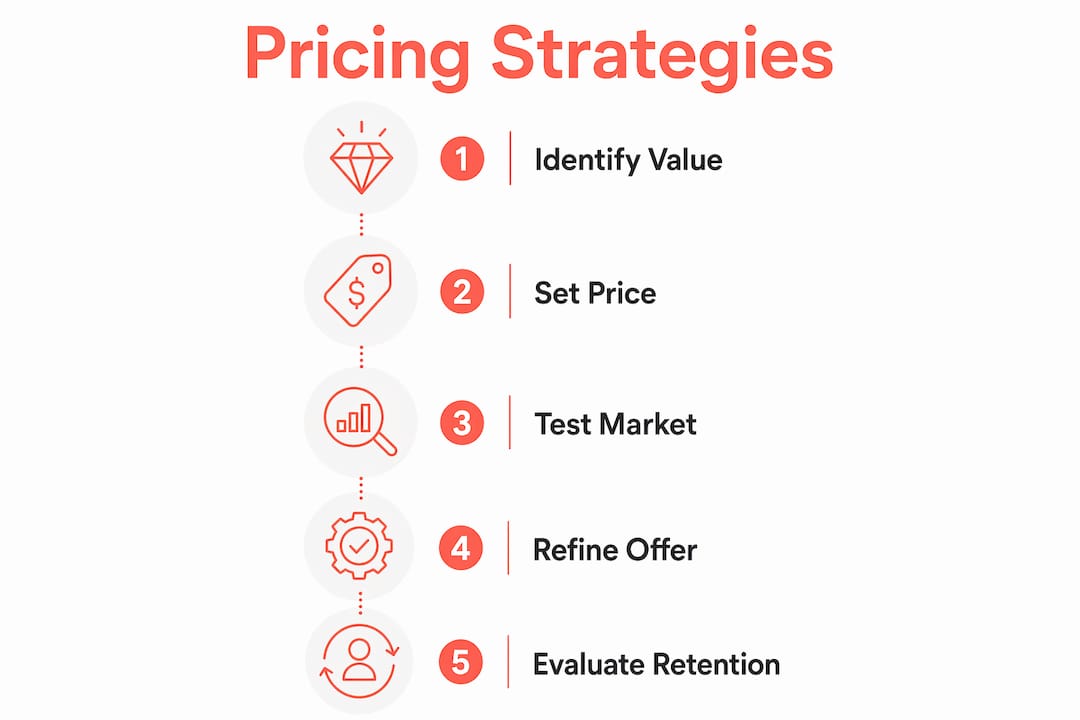
Value-based pricing starts with what the subscriber believes the ongoing relationship is worth, not what it costs to fulfil. A beauty box that retails for $120 in products but ships for $45 per month creates clear perceived value. Cost-plus pricing, by contrast, anchors the price to your costs and leaves money on the table when customers would happily pay more.
Successful subscriptions differentiate through personalisation and exclusive access, not discounts alone. Competing on price trains subscribers to expect lower prices and makes switching easy the moment a cheaper option appears. Exclusivity, personalisation, and curated value solve a customer pain point. A discount just reduces your margin.
Billing cadence also drives retention. Monthly billing suits discovery and curation models because the commitment feels low. Quarterly or annual billing suits replenishment models because it aligns with consumption and locks in revenue. Annual subscribers churn at a fraction of the rate of monthly subscribers, which is why offering an annual discount at signup is one of the highest-return pricing moves available.
- Align shipping frequency with actual consumption rate, not your preferred dispatch schedule
- Offer annual billing with a modest discount to reduce churn and improve cash flow
- Use tiered pricing to capture different willingness-to-pay segments without discounting the core offer
- Build exclusivity into higher tiers through early access, personalisation, or member-only products
Pro Tip: Test your pricing with a small cohort before committing to a platform-wide structure. Subscriber perceived value shifts once the novelty of the first delivery fades, so price to the ongoing relationship, not the acquisition moment.
For a deeper look at ecommerce pricing strategy and how value-based approaches apply across product categories, Moormarketing’s 2026 guide covers the full framework.
What operational systems do subscription businesses need?
Technology infrastructure is where subscription models either run smoothly or fall apart. The wrong platform choice creates billing errors, subscriber frustration, and churn that has nothing to do with your product.
- Native recurring billing. Choose a platform with built-in subscription billing rather than a plugin bolted onto a standard checkout. Plugins introduce sync failures, failed payment handling gaps, and update conflicts that create revenue leakage.
- Automated dunning. Dunning is the process of retrying failed payments and notifying subscribers before their card expires. Good subscription platforms include automated dunning as a core feature, not an add-on. Without it, involuntary churn from failed payments silently erodes MRR.
- Subscriber self-service portal. Subscribers who can pause, skip, swap, or update their delivery details without contacting support are far less likely to cancel. A self-service portal reduces support workload and gives subscribers the control they expect.
- Pause and skip functionality. Allowing subscribers to pause a subscription rather than cancel is one of the most direct retention tools available. A subscriber who pauses is still a subscriber. One who cancels requires a win-back campaign to recover.
- Proration and mid-cycle changes. Subscribers who upgrade or downgrade mid-cycle expect accurate billing. Manual proration calculations create errors and erode trust. Native platform support for proration handles this automatically.
- Compliance with cancellation rules. The FTC Click-to-Cancel rule mandates that subscribers can cancel online without obstacles. Non-compliant cancellation flows create legal exposure and damage brand trust.
Integration complexity compounds with every third-party app added to the stack. Each connection point is a potential failure. Prioritise platforms where subscription management is native, not assembled from five separate tools.
How can ecommerce businesses reduce subscriber churn?
Retention drives the economics of every subscription model. Acquiring a new subscriber costs significantly more than keeping an existing one, so churn is not just a metric. It is the primary threat to long-term profitability.
Curation subscription boxes face monthly churn rates of 10–15%. That rate means a curation business loses roughly one in eight subscribers every month without active retention work. At that pace, the acquisition cost never pays back unless average subscriber tenure extends well beyond three months.
Pause-before-cancel flows improve retention by giving subscribers an alternative to outright cancellation. When a subscriber clicks cancel, presenting a pause option converts a meaningful percentage of would-be cancellations into temporary holds. Many of those subscribers reactivate without any further intervention.
- Offer a pause option at the point of cancellation, not buried in account settings
- Run win-back campaigns to lapsed subscribers with a personalised offer within 30 days of cancellation
- Use post-delivery surveys to identify dissatisfaction before it becomes a cancellation
- Personalise product selections based on subscriber history and stated preferences
- Align shipping cadence with consumption to prevent product accumulation, the single biggest churn driver in replenishment models
Pro Tip: Segment your churn data by acquisition channel and subscription age. Subscribers who cancel in month one have a different problem than those who cancel in month six. Treating them the same way wastes budget and misses the real issue.
For a full breakdown of retention tactics that apply directly to subscription ecommerce, Moormarketing’s 2026 retention guide covers the complete playbook.
What challenges do entrepreneurs face when scaling subscription services?
Launching a subscription service is straightforward. Scaling one profitably is where most ecommerce entrepreneurs hit a wall.
Unit economics must be validated before scaling spend. Target at least 40% gross margin and a 3:1 LTV:CAC ratio before increasing acquisition investment. Scaling a model with weak unit economics accelerates losses, not growth. Every new subscriber acquired below the viability threshold makes the business harder to fix, not easier.
Customer trust is a prerequisite for subscription conversion. Shoppers who have never bought from a brand are unlikely to commit to a recurring charge. Build trust through one-time purchases, strong reviews, and transparent cancellation policies before pushing subscription upgrades. Subscriptions succeed by solving specific customer pain points like decision fatigue and time savings, not just by offering products at a slight discount.
- Validate LTV:CAC and gross margin on a small cohort before scaling paid acquisition
- Match shipping cadence to actual consumption patterns, not assumed ones
- Build cancellation policies that are visible and frictionless before launch
- Roll out features gradually rather than building a complex system before you have subscribers to test it on
- Monitor ecommerce growth metrics like MRR growth rate and cohort retention alongside standard revenue figures
Modest churn compounds quickly. A 5% monthly churn rate means losing more than half your subscriber base within a year. Validating unit economics early, before churn has time to compound, is the difference between a subscription business that scales and one that stalls.
Key takeaways
Subscription ecommerce succeeds when recurring billing, retention systems, and unit economics are validated together before scaling acquisition spend.
| Point | Details |
|---|---|
| Model selection matters | Choose replenishment, curation, access, or hybrid based on your product’s consumption pattern and margin profile. |
| Pricing drives retention | Value-based pricing and annual billing cadence reduce churn more reliably than discounts. |
| Technology must be native | Platforms with built-in billing, dunning, and subscriber portals outperform plugin-dependent stacks. |
| Churn compounds fast | Curation models face 10–15% monthly churn; pause-before-cancel flows and personalisation are the primary defences. |
| Validate before scaling | A 3:1 LTV:CAC ratio and 40% gross margin are the minimum benchmarks before increasing acquisition spend. |
What I’ve learned about subscription models that most guides won’t tell you
The conversation around subscription ecommerce tends to focus on acquisition. Get the subscriber, build the MRR, watch the revenue grow. What gets far less attention is how quickly a poorly designed subscription experience destroys the economics that made the model attractive in the first place.
I’ve seen businesses with genuinely great products lose subscribers in month two because the billing portal was confusing, the cancellation process required a phone call, or the shipping cadence sent three months of product in six weeks. None of those failures had anything to do with the product. They were operational and design failures that eroded trust.
The brands that build durable subscription revenue treat the subscriber experience as a product in itself. They obsess over the moment a subscriber considers pausing. They test win-back sequences. They map consumption rates before they set a shipping schedule. They treat churn data as the most important signal in the business, not a lagging indicator to review quarterly.
The other thing most guides skip is the legal side. The FTC Click-to-Cancel rule is not a technicality. Subscribers who feel trapped by a cancellation process do not stay quiet. They dispute charges, leave reviews, and tell their networks. Easy cancellation is not a risk to your MRR. Difficult cancellation is.
If you are building or scaling a subscription model, start with the exit. Design the cancellation flow before you design the acquisition funnel. A subscriber who can leave easily is far more likely to stay.
— Liza
How Moormarketing helps ecommerce businesses build subscription revenue
Subscription models require more than a billing platform. They require a clear acquisition strategy, a retention framework, and pricing that holds up under real subscriber behaviour.

Moormarketing works directly with ecommerce businesses to build and refine subscription strategies that generate consistent recurring revenue. The ecommerce marketing workshops cover subscription model selection, pricing structure, retention workflows, and the unit economics validation process that separates profitable subscription businesses from ones that grow fast and stall. Every workshop is run by senior strategists, not outsourced. If you want a subscription model that actually compounds, the frameworks are there to build it on.
FAQ
What is an ecommerce subscription model?
An ecommerce subscription model is a recurring billing arrangement where customers pay a regular fee for ongoing product deliveries or access to member benefits. It replaces one-time transactions with predictable revenue and ongoing customer relationships.
What are the main types of ecommerce subscriptions?
The six main types are replenishment, curation, access, usage-based, freemium, and hybrid models. Each suits different product categories and customer behaviours.
How do I reduce churn in a subscription business?
Offer pause-before-cancel options, align shipping cadence with actual consumption, and personalise product selections based on subscriber history. Curation models face 10–15% monthly churn without active retention work.
What unit economics should I validate before scaling?
Target at least a 3:1 LTV:CAC ratio and 40% gross margin before increasing acquisition spend. Scaling below these thresholds accelerates losses rather than growth.
What does the FTC Click-to-Cancel rule require?
The FTC Click-to-Cancel rule requires subscription businesses to allow customers to cancel online without obstacles such as mandatory phone calls or multi-step retention traps. Non-compliance creates legal exposure and damages subscriber trust.