

Social commerce integration is the process of technically linking a brand’s social media shopping features with its ecommerce backend to enable direct purchases and smooth fulfilment without leaving the social platform. The industry term for this is “social commerce integration,” and it covers the synchronisation of product catalogues, inventory management, order management systems (OMS), and payment gateways across platforms like Instagram, TikTok, and Pinterest. The social commerce market is projected to surpass $1 trillion globally by early 2026. That figure signals a fundamental shift in how consumers discover and buy products. For ecommerce business owners and marketers, understanding this integration is no longer optional. It is the difference between capturing social-driven revenue and watching it go elsewhere.
What is social commerce integration and how does it work technically?
Social commerce integration connects your social media storefronts directly to your ecommerce backend systems. The connection covers four core components: inventory management, an order management system, payment gateways, and customer data. When a shopper taps “Buy Now” on an Instagram post, the integration pulls live stock levels, processes the payment, and routes the order to your fulfilment team, all without the customer leaving the app.

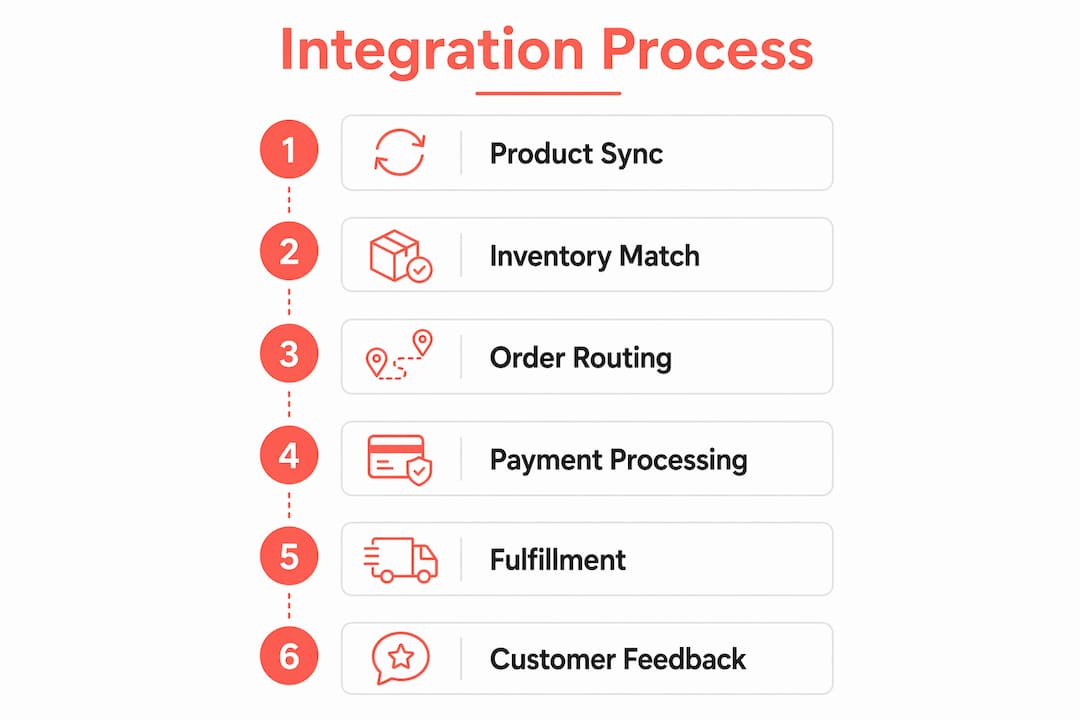
The technical flow works in a specific sequence. Your product catalogue syncs to the social platform using a structured data feed. The platform reads that feed, displays your products, and accepts orders. Those orders then pass back through a middleware layer or native connector into your OMS. The OMS triggers fulfilment and updates inventory in real time.
Social commerce integration synchronises social storefronts with inventory, OMS, and payment gateways for smooth fulfilment. That synchronisation is what prevents a customer from buying a product you no longer have in stock.
Pro Tip: Map your full order flow on paper before you connect any system. Knowing exactly where data moves between your social platform, middleware, and OMS will save you hours of troubleshooting later.
The role of middleware and native connectors
Middleware sits between your social platform and your ecommerce backend. It translates data formats, manages API calls, and keeps both systems in sync. Without it, a sale on TikTok Shop might not decrement your Shopify inventory for several minutes, creating overselling risk. Robust middleware or connectors are critical to synchronise social sales with backend inventory and prevent overselling. Smaller businesses often use native platform connectors. Larger operations with complex catalogues typically need custom API builds.
Data hygiene: the hidden integration killer
Poor product data is the most common reason integrations fail at launch. Social platforms validate every product feed against their own schema. Missing attributes, wrong image ratios, or inconsistent pricing cause automatic rejections. Data hygiene, meaning clean and accurate product feeds, is crucial to avoid rejection by social platforms and integration failure. Audit your product catalogue before you connect anything. Fix missing fields, standardise naming conventions, and confirm that every SKU has a valid GTIN or MPN where required.
| Integration component | Function | Common failure point |
|---|---|---|
| Product catalogue feed | Syncs product data to social platform | Missing attributes or wrong schema |
| Inventory management | Tracks real-time stock levels | Delayed sync causing overselling |
| Order management system | Routes and tracks orders | Duplicate orders from multiple channels |
| Payment gateway | Processes in-app transactions | Currency or region mismatches |
| Middleware/connector | Translates data between systems | API rate limits or version conflicts |
What are the key benefits of social commerce integration for businesses?
The primary benefit is friction reduction. Keeping customers within the social ecosystem by enabling in-app checkout reduces drop-off rates significantly. Every extra step between discovery and purchase costs you conversions. When a customer can complete a purchase inside Instagram without switching apps, the path to sale shortens dramatically.
Beyond checkout convenience, integration delivers measurable operational gains:
- Inventory accuracy. Real-time sync means your social storefront always reflects actual stock. Fewer cancelled orders and fewer angry customers.
- Richer customer data. Social platforms capture engagement signals, watch time, saves, and shares, that your own website cannot. That data feeds better ad targeting and personalisation.
- Impulse purchase capture. Social feeds are built for discovery. A well-placed shoppable post catches buyers in a high-intent moment that a Google search never would.
- Omnichannel consistency. Orders from Instagram, TikTok, and your website all flow into one OMS. Your team sees one unified view of demand.
- Increased store visits. Shoppable content drives both online conversions and foot traffic for brands with physical locations.
41% of brands on Instagram had adopted native product tagging and shopping features by february 2026. That adoption rate shows the industry has already moved past the “wait and see” phase.
“Social commerce integration’s main value is eliminating friction in the purchase flow by keeping customers inside social platforms. Brands that remove that friction see measurable lifts in conversion rates and average order values.”
How to integrate social commerce into your ecommerce strategy
Effective implementation follows a clear sequence. Skipping steps, particularly the testing phase, is the fastest way to waste budget and damage customer trust.
-
Choose one platform and one commerce motion. Testing a single platform and one commerce feature, such as product tagging or live selling, before scaling is the proven approach. Instagram product tagging suits visual lifestyle brands. TikTok Shop suits brands with strong video content. Pick the channel where your audience already spends time. For TikTok-specific tactics, the TikTok ads for ecommerce guide covers platform-specific setup in detail.
-
Set measurable goals before you launch. Define whether you are optimising for store visits, email signups, or direct conversions. Without a clear goal, you cannot interpret your results or justify scaling spend.
-
Audit and clean your product data. Run your catalogue through the social platform’s product feed validator before connecting. Fix every error and warning. A clean feed is the foundation of a working integration.
-
Select the right integration tool for your business size. Smaller businesses prefer plug-and-play Shopify integrations. Larger enterprises often choose Magento or custom API builds for flexible checkout flows. The choice of ecommerce platform directly affects how much control you have over the checkout experience and how deeply you can customise the integration.
-
Run a controlled test, measure, then scale. Launch with a small product selection. Track order accuracy, inventory sync speed, and conversion rate. Fix any errors before expanding your catalogue or adding more platforms.
Pro Tip: Set up a dedicated test order process before going live. Place real orders through your social storefront and trace each one through your OMS to confirm the full flow works end to end.
For broader campaign planning that supports your social commerce launch, the ecommerce email and ads integration guide covers how to align your paid and owned channels with your social commerce rollout.
How does social commerce fit into an omnichannel ecommerce strategy?
Social commerce does not replace traditional ecommerce. It complements it as part of an omnichannel strategy. Brands that treat social channels as standalone sales channels miss the bigger opportunity. The real value comes from using social commerce data to inform decisions across every channel.
Here is how social commerce strengthens your broader omnichannel approach:
- Consistent customer experience. A shopper who discovers your brand on TikTok and later visits your website should encounter the same pricing, product availability, and brand voice.
- Real-time engagement data. Social platforms surface which products generate saves, shares, and comments. That signal tells you what to feature in email campaigns and paid ads.
- Unified inventory view. When social orders flow into the same OMS as your website and marketplace orders, you get an accurate picture of demand across every channel.
- Younger demographic reach. Social commerce adoption is highest among younger shoppers who prefer to complete purchases without leaving their feed. Meeting them there is a channel extension, not a channel replacement.
- Synergy with owned channels. A customer who buys through Instagram can be retargeted via email. A customer who abandons a cart on your website can be reached with a shoppable ad on Pinterest.
| Channel | Role in omnichannel strategy | Social commerce contribution |
|---|---|---|
| Brand website | Primary conversion hub | Social drives discovery and top-of-funnel traffic |
| Email marketing | Retention and repeat purchase | Social data improves segmentation and personalisation |
| Paid social ads | Acquisition and retargeting | Shoppable formats shorten the path to purchase |
| Marketplaces | Volume and reach | Social commerce adds brand-owned touchpoints |
The risk of channel cannibalisation is real but manageable. Track attribution carefully. If social commerce is pulling conversions that would have happened on your website anyway, adjust your strategy. If it is reaching net-new buyers, scale it.
Key takeaways
Social commerce integration works when clean product data, real-time inventory sync, and a tested middleware layer connect your social storefronts directly to your OMS and fulfilment systems.
| Point | Details |
|---|---|
| Definition is specific | Social commerce integration links social storefronts to inventory, OMS, and payment systems for in-app purchases. |
| Data hygiene is non-negotiable | Clean, schema-compliant product feeds prevent platform rejections and integration failure at launch. |
| Test before you scale | Start with one platform and one commerce motion, measure results, then expand to additional channels. |
| Middleware prevents overselling | Real-time connectors between social platforms and your OMS keep stock levels accurate across all channels. |
| Social commerce complements, not replaces | Brands achieve the best results when social commerce data informs decisions across email, paid ads, and owned websites. |
What I have learned from watching brands get this wrong
Most ecommerce marketers I speak with underestimate the backend complexity of social commerce integration. They see the consumer-facing simplicity of a shoppable Instagram post and assume the technical setup is equally straightforward. It rarely is.
The most common failure I see is launching with a dirty product catalogue. A brand will spend weeks negotiating a TikTok Shop partnership, then watch the integration collapse on day one because 30% of their SKUs are missing required attributes. The platform rejects those products silently. The brand assumes the integration is broken. The real problem is a spreadsheet that was never properly maintained.
The second mistake is skipping the test phase to hit a launch deadline. I have watched brands push live with a full catalogue across three social platforms simultaneously, only to discover their OMS cannot handle the order volume without duplicating records. A two-week controlled test with 20 products would have caught that.
What I find genuinely exciting about social commerce is what it does to the customer relationship. When a brand can meet a shopper inside the content they are already consuming, the transaction feels less like a purchase and more like a natural next step. That shift in perception changes how customers relate to a brand long after the first order. The brands building that kind of relationship now will have a structural advantage as social commerce matures. The technology will keep improving. The middleware will get easier. But the brands that have already built trust inside social platforms will be very hard to displace.
— Liza
How Moormarketing helps ecommerce brands with social commerce
Moormarketing works directly with ecommerce business owners and marketers to build social commerce strategies that connect to real revenue outcomes. The team has supported brands from initial integration planning through to scaling social-driven sales across multiple platforms, with results including $3 million a month for a global furniture brand and $2 million monthly for a new toy retailer.

If you are ready to build a social commerce approach that fits your existing systems and growth targets, Moormarketing’s ecommerce marketing workshops give you a structured framework to plan, test, and scale without guesswork. For brands that want hands-on senior strategist support, the ecommerce growth strategy programme is built to deliver measurable revenue growth, not generic advice.
FAQ
What is social commerce integration in simple terms?
Social commerce integration connects your social media shopping features directly to your ecommerce backend, including inventory, orders, and payments, so customers can buy without leaving the social platform.
Which social platforms support social commerce integration?
Instagram, TikTok, and Pinterest all offer native shopping features that connect to ecommerce backends via product feeds and APIs. The right platform depends on where your audience is most active.
How does social commerce integration prevent overselling?
Middleware or native connectors sync inventory in real time between your social storefront and your OMS. Every sale on a social platform immediately decrements your stock count to prevent duplicate or oversold orders.
Do I need a developer to set up social commerce integration?
Smaller businesses using Shopify can often connect to social platforms using native integrations without custom development. Larger businesses with complex catalogues or Magento builds typically need developer support for API configuration.
Does social commerce replace my existing ecommerce website?
Social commerce complements your website rather than replacing it. It extends your sales presence into social platforms while your website remains the primary conversion hub and brand-owned channel.