

Acquiring an ecommerce business is a formal transaction governed by structured due diligence, financing agreements, and legal documentation. Understanding how ecommerce businesses are acquired means recognising that platforms like Empire Flippers and Flippa list opportunities ranging from under $5,000 to over $20 million, and that tools like SBA 7(a) loans fund deals up to $5 million with as little as 10% equity down. This is not a casual website purchase. It is a business acquisition with the same rigour as buying any operating company, and the buyers who succeed treat it that way.
How ecommerce businesses are acquired: deal structures and financing
The standard structure for an ecommerce acquisition is an asset purchase, completed cash-free and debt-free. The seller retains their legal entity and any existing liabilities. The buyer acquires the assets: intellectual property, inventory, customer lists, supplier contracts, and domain rights. Working capital and inventory levels are negotiated separately and adjusted at closing.
Deal structures typically follow one of three paths:
- Cash purchase. The buyer pays the full agreed price at closing. This is the fastest path, with timelines of 60 days from Letter of Intent to close and 30–45 days of due diligence built in.
- SBA 7(a) loan financing. The SBA 7(a) programme covers ecommerce acquisitions up to $5 million. Buyers inject 10% equity, with 10-year amortisation at Prime plus 2.5–3%. SBA-financed deals extend the timeline to approximately 90 days. Working with an SBA lender experienced in ecommerce is non-negotiable. Inexperienced lenders routinely delay or reject deals because they do not understand traffic concentration or digital revenue models.
- Seller financing. The seller carries a portion of the purchase price as a note, reducing the buyer’s upfront cash requirement. Seller notes are common in deals where the buyer needs to bridge a gap between SBA proceeds and total purchase price.
Pro Tip: Negotiate a seller note alongside your SBA loan wherever possible. It reduces your cash at close and aligns the seller’s incentive with your success during the transition period.
Typical operator deals sit in the $100,000–$5 million range with multiples of 2.5–4x Seller’s Discretionary Earnings (SDE). Below $100,000, documentation quality drops sharply. Above $5 million, you are competing with aggregators and private equity.

Who are the main buyer types in ecommerce acquisitions?
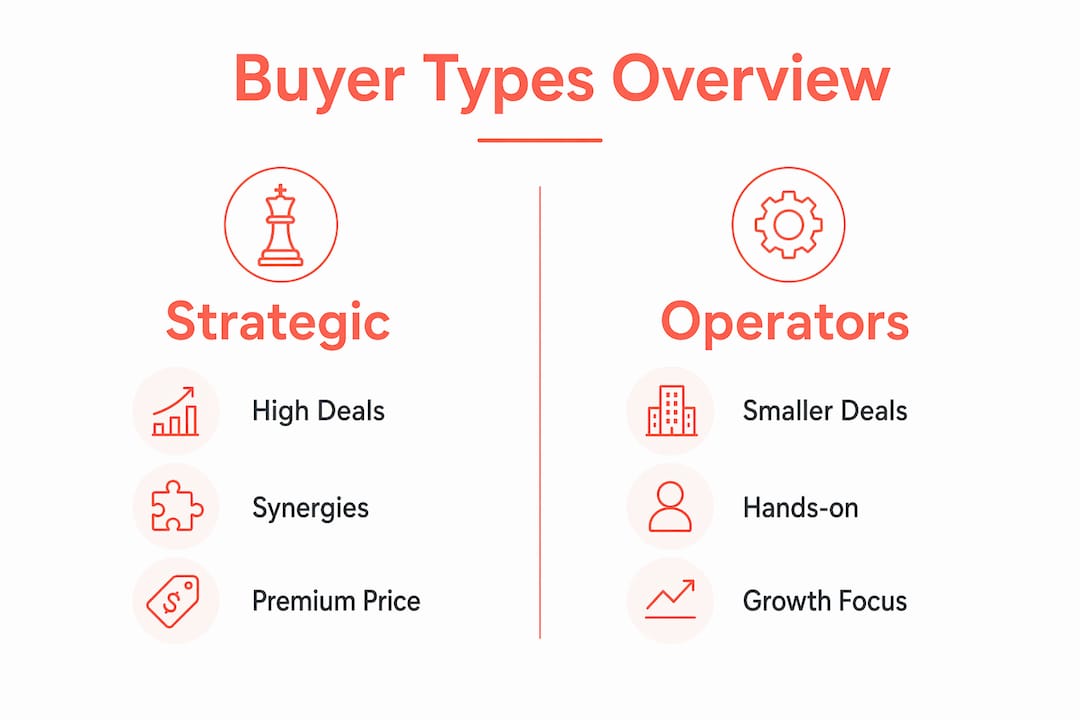
Buyer type determines valuation approach, deal speed, and what the seller experiences post-close. The four main categories are strategic acquirers, private equity firms, aggregators, and operator buyers.
| Buyer type | Typical deal size | Multiple paid | Key motivation |
|---|---|---|---|
| Strategic acquirer | $5M+ | Highest (synergy premium) | Brand fit, customer overlap, channel expansion |
| Private equity | $2M–$50M+ | Moderate to high | Profitability, growth thesis, portfolio leverage |
| Aggregator | $500K–$5M | Moderate | Volume, operational efficiency, category dominance |
| Operator buyer | $100K–$5M | 2.5–4x SDE | Owner-operated growth, lifestyle business |
Strategic acquirers pay the highest multiples because they are buying synergies, not just cash flow. e.l.f. Beauty’s acquisition of Naturium at approximately 5x trailing revenue illustrates this clearly. They are not paying for what the business earns today. They are paying for what it earns inside their distribution network tomorrow.
Private equity buyers focus on EBITDA, growth trajectory, and whether the business can absorb capital to scale. They run longer diligence cycles and require clean financials across multiple years.
Aggregators, which became prominent through the Amazon FBA roll-up model, prioritise speed and operational fit. They accept more risk per deal but move fast and have standardised integration playbooks. The trade-off is that they rarely pay top dollar.
Operator buyers are individuals or small teams acquiring a business to run directly. Operator buyers require the most seller transition support because they are stepping into an operational role, not just a financial one. Sellers dealing with operator buyers should expect detailed handover requirements and extended Q&A periods.
What are the critical due diligence and valuation criteria?
Due diligence is where acquisitions succeed or fail. The average process runs 4–8 weeks and requires access to Google Analytics, advertising accounts, Seller Central data, and merchant processor payouts.
The most common pitfall is financial statement reconciliation. Discrepancies between tax returns and merchant payout data signal potential fraud or unsustainable revenue patterns. Never rely on a seller-provided P&L alone. Cross-reference every revenue figure against raw processor data from Stripe, PayPal, or Amazon Seller Central.
Key valuation and risk factors to assess:
- Traffic source concentration. A business generating 80% of revenue from a single Google Shopping campaign or one Amazon listing carries significant platform risk. Diversified traffic across organic search, email, paid social, and direct is worth a higher multiple.
- Customer acquisition cost and repeat purchase rate. High repeat purchase rates reduce reliance on paid acquisition and improve lifetime value. A business with 40%+ returning customer revenue is structurally more defensible.
- Inventory and fulfilment risks. Assess supplier concentration, lead times, and whether inventory is held in a third-party logistics provider like ShipBob or managed in-house. Concentrated supplier relationships in single-country manufacturing add risk.
- Legal and tax documentation. Confirm trademark registrations, supplier agreements, and that the business has no outstanding tax liabilities. Clean documentation accelerates SBA approval and reduces post-close surprises.
- Single-channel Amazon businesses face more financing hurdles than multi-channel, asset-light brands. SBA lenders scrutinise platform dependency heavily.
Pro Tip: Request read-only access to Google Analytics and the ad accounts before signing a Letter of Intent. Traffic trends and ad spend efficiency will tell you more than any seller-prepared summary document.
Category selection is the most consequential decision a buyer makes. It affects financing options, the depth of diligence required, and the operational expertise you need from day one. Do not acquire in a category you cannot operate confidently.
How to manage the post-acquisition transition effectively
The first 90 days after closing determine whether you protect or destroy the value you just paid for. The rule is straightforward: do not change anything material until you understand why it works.
- Freeze major changes. No major changes to marketing, pricing, or operations in the first 90 days. Traffic and conversion rates are fragile during ownership transitions. A single poorly timed campaign change can collapse organic rankings or burn an ad account’s learning phase.
- Maximise seller access. Sellers typically remain available for 90–180 days post-close for Q&A and transition support. Use this period aggressively. Document every supplier relationship, every platform login, and every operational process the seller has in their head.
- Audit your marketing channels. Once you have a baseline understanding of the business, audit each channel for efficiency. Email sequences, paid search, and affiliate programmes are often under-optimised in owner-operated businesses. Platforms like Klaviyo for email and Google Ads for paid search frequently have untapped performance gains.
- Diversify traffic sources. If the business relies heavily on one channel, begin building alternatives in months two and three. An ecommerce growth strategy that adds organic content, affiliate partnerships, and retargeting reduces platform risk and increases the business’s future sale multiple.
- Plan add-on acquisitions within your category. The most efficient path to scale is acquiring complementary businesses in the same category. You already understand the customer, the suppliers, and the margin structure. A second acquisition in the same niche costs less to integrate and delivers faster returns.
Affiliate and partner marketing programmes are frequently overlooked in the first year post-acquisition. They build revenue without proportional ad spend increases and are worth prioritising early.
Key takeaways
Successful ecommerce acquisitions require structured due diligence, the right financing pathway, and a disciplined first 90 days to protect the value paid at closing.
| Point | Details |
|---|---|
| Deal structure matters | Most ecommerce deals are asset purchases, cash-free and debt-free, with inventory negotiated separately at closing. |
| SBA loans fund most operator deals | SBA 7(a) loans cover acquisitions up to $5 million with 10% equity, but require an experienced ecommerce lender. |
| Buyer type drives valuation | Strategic acquirers pay the highest multiples; operator buyers need the most seller transition support. |
| Due diligence is non-negotiable | Reconcile all financials against raw processor data and assess traffic concentration before signing anything. |
| First 90 days protect your investment | Avoid operational changes immediately post-close and use the seller’s transition period to document everything. |
What I have learned from watching ecommerce acquisitions go wrong
The buyers who struggle most are the ones who treat an ecommerce acquisition like a passive investment. They buy a Shopify store generating $30,000 a month in SDE, assume the revenue will continue without active management, and then watch traffic erode within six months because they changed the ad strategy too early or lost a key supplier relationship.
The second most common mistake is buying in an unfamiliar category because the numbers looked good. A business selling industrial components requires completely different supplier management skills than one selling consumer skincare. The financials can look identical. The operational reality is not.
What actually works is buying within your existing knowledge base, financing conservatively so debt service does not strangle your operating flexibility, and treating the seller as a resource rather than an obstacle. The sellers who stay engaged post-close are genuinely valuable. They know why the business converts at 3.8% when the category average is 2.1%. That knowledge does not transfer through a data room.
I also think buyers underestimate how much post-acquisition marketing capability matters. Acquiring a business with strong organic traffic is only valuable if you can maintain and build on it. Understanding ecommerce scaling frameworks before you close means you are not learning on the job during the most critical period of ownership.
Be patient with underwriting. Conservative assumptions on revenue growth and customer acquisition costs will protect you when reality diverges from the seller’s projections. It always does, at least in the first year.
— Liza
How Moormarketing helps you grow after the acquisition
Acquiring the business is step one. Growing it profitably is where the real work begins.
Moormarketing works directly with ecommerce business owners to build the marketing infrastructure that sustains and scales revenue after a change of ownership. From auditing existing ad accounts to building retention-focused email programmes, Moormarketing’s senior strategists handle the execution without outsourcing. Their ecommerce marketing workshops are specifically designed for owners who need to understand their marketing channels deeply, not just delegate them. If you have just acquired a business or are preparing one for sale, Moormarketing’s growth strategy frameworks give you a clear path from current revenue to the next level.
FAQ
How long does it take to acquire an ecommerce business?
Cash deals typically close in 60 days from LOI, with 30–45 days allocated to due diligence. SBA-financed acquisitions extend the timeline to approximately 90 days.
What multiple do ecommerce businesses sell for?
Most operator-level deals trade at 2.5–4x SDE, depending on traffic diversification, growth trajectory, and category. Strategic acquirers can pay significantly higher multiples when synergies justify the premium.
What is the best way to finance an ecommerce acquisition?
SBA 7(a) loans are the most common financing tool for deals up to $5 million, requiring 10% equity from the buyer. Pairing an SBA loan with a seller note reduces upfront cash and aligns seller incentives with a successful transition.
What should I check during due diligence?
Reconcile all revenue figures against raw merchant processor data and review Google Analytics, ad accounts, and Seller Central access. Assess traffic source concentration, customer repeat rates, and supplier agreements before signing.
How do I find ecommerce businesses for sale?
Marketplaces like Empire Flippers and Flippa list businesses across all price ranges, from under $5,000 to over $20 million. Deals above $1 million are also sourced through business brokers and direct outreach to owners in your target category.